28 February 2005

Weekend at the 'Beach'

From thursday until yesterday I was at Regent University in Virginia Beach, Virginia, speaking at their annual Christian Pre-Law Conference. I was invited to participate in this event by Prof. Michael P. Schutt, who teaches at the School of Law. I was asked to speak on two topics. First, on friday morning, I spoke to the pre-law advisors on the subject of liberalism and its alternatives. The following morning I addressed the undergraduate students on the task of the christian scholar. I was pleased that my remarks were well received by both groups.

The trip got off to something of an inauspicious start. On thursday morning I woke up with a cold. Travelling was the last thing I was wanting to do at that point. I taught my two classes as usual. An Airways Transit van picked me up at Redeemer and ferried me to Pearson Airport in Toronto. As I was getting off the van, I somehow managed to leave my gloves behind. Because of bad weather in Washington, DC, my plane was late leaving Pearson, and my second plane to Norfolk, Virginia, was late leaving Dulles Airport in Washington. I didn't get into Norfolk until well after midnight. I finally got to bed shortly after 2 am. That left me about four and a half hours to sleep. At 9.15 I had to be alert enough to speak to an audience. I did indeed manage to be up in time, but as I was dressing I discovered I had neglected to pack any socks! What else could go wrong? Fortunately, nothing else did.


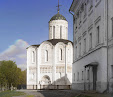
Regent University School of Law


During my stay, I was billeted at the Founders Inn and Conference Center, a quite nice hotel on the Regent campus boasting comfortable rooms and excellent food. I was favourably impressed with the professional quality of the hospitality, as well as with the friendliness of the staff.

Although Regent was founded by the famed television evangelist, Pat Robertson, I didn't sense that his presence is an overwhelming one. I did not hear his name mentioned once, and I saw only an oil portrait of him at the Founders Inn. There doesn't appear to be a cult of personality, if my two-and-a-half days there were any indication. Many of the people present came from a cluster of christian universities in the American south, most of which were new to me.

During my stay, I had the opportunity to visit close relatives on the paternal side who live in town. It seems they are not the only Cypriots who have chosen to live in the Virginia area. Virginia Beach's proximity to the ocean undoubtedly reminds them of such cities in Cyprus as Famagusta and Limassol. That is certainly the case with my uncle, aunt and cousins who live there.

Virginia Beach is part of the so-called bible belt. The phone directory's yellow pages are filled with pages and pages of churches, most of which are Southern Baptist, Pentecostal and various independent baptistic congregations. I understand that a municipal bylaw prohibits profanity, the violation of which will incur a fine, if overheard. (I don't know exactly which words are proscribed. Perhaps they are listed in the text of the bylaw itself.)

The Norfolk Airport is much larger than I had imagined it would be. I was told that there is a considerable military presence in Norfolk and that the airport is one of the major transit point for US military personnel.

There was no snow in Virginia Beach, although it was definitely on the cold side. Needless to say, there is plenty of snow here in Hamilton. In fact, we are getting hit with a major storm as I write. I may or may not be teaching tomorrow.
Mother, how could you?

It's official: "Queen won't attend Charles-Camilla wedding." But that's not all. Wedding plans have not gone smoothly from day one. Could they put in jeopardy Charles' place in line for the throne? Possibly in Australia at least.
An unfavourable review

Since the publication of my Political Visions and Illusions nearly two years ago, I have been gratified by its overwhelmingly positive reception in a number of quarters, including the popular evangelical journal Christianity Today, and by the Word Guild award it received last year. Nevertheless, it would be the rare book that received no unfavourable reviews at all, and mine is hardly an exception. Last month's issue of First Things carried a "briefly noted" review of my book by one James R. Rogers which was almost entirely unfavourable. It is not easy to interact or respond to such a brief treatment, as one suspects there is much beneath the surface which remains unsaid. Yet at some point I may indeed write a response.

25 February 2005

Kudos to an alumnus

Congratulations are due to Paul A. Brink, who successfully defended his dissertation on John Rawls' political theory yesterday at the University of Notre Dame. Dr. Brink graduated from Redeemer in 1993 with a major in political science. He is currently teaching this subject at Eastern University in Pennsylvania. We are very proud of him.

Congratulations may be sent to him at this address: pbrink{at}eastern{dot}edu.

24 February 2005

Christian order flirting with pantheism?

The Sisters of Charity is a Catholic order founded by a disciple of St. Elizabeth Ann Seton in the 19th century. The website for the order's Halifax branch indicates a supportive connection with the Centre for Earth and Spirit in Glenairley, British Columbia. A perusal of the latter's website, especially the page titled "About Us," leads one to believe that the Centre's understanding of the work of the "Spirit" brings it perillously close to pantheism. This raises two questions: (1) Shouldn't it be possible to favour the protection of the physical environment without embracing pantheism? The Centre is hardly the only environmental group to fall into this heresy and adopting what is sometimes labelled eco-spirituality. (2) Isn't the Catholic Church against pantheism? That was my impression.

While we're on the subject of ecology, the Acton Institute's Kevin Schmiesing argues that the Kyoto Accord, which has recently come into effect, represents the wrong way to protect the environment. Schmiesing writes: "Where environmental standards must be set through the consensus of a political community, the usual political process can accomplish the task." The Acton Institute tends to be sceptical of most environmental concerns, including global warming.

I have just completed a review of James W. Skillen's latest book, In Pursuit of Justice, for an upcoming issue of Acton's Journal of Markets & Morality. In contrast to Schmiesing, Skillen argues that protection of the environment ought not to be considered just one more issue, subject to the ordinary political and judicial bargaining processes, but must instead be seen as an integral element of our larger calling to be stewards of God’s creation. In our societies, if no one were willing to contend for the physical environment in competition with loggers, defence contractors and many others, it would tend to be left out of consideration altogether in the policy process. As an alternative Skillen argues that "the environment must be taken into consideration at a constitutional level" (p. 124), possibly by the adoption of measures similar to existing local zoning laws. An interesting idea, to be sure.

22 February 2005

Colson on the 'religious left'

Although I was less than enthusiastic last year about Chuck Colson using his daily Breakpoint commentaries in so overtly partisan a fashion, I agree with him here: "Moral Equivalency: The Religious Left Gets It Wrong." Not all political issues are equal, and some may be more foundational than others. At the same time, I do wonder. If those of us who are pro-life were to succeed in enacting a law that would in some measure protect the unborn while not offering as much protection as we might like, do we still hammer away on this one issue while allowing other issues to take the back burner? Or do we accept that this may be the best that can be hoped for at present and move on? Just a question.
Photos from Ottawa


The following photos were taken during my visit to Ottawa on 10-12 February. As can be seen, there was little activity in and around the Parliament buildings, as it was early saturday morning and the temperatures were quite cold.


Centre Block with Peace Tower, Parliament Hill


Centre Block, seen from rear;
Parliamentary Library (far right), under wraps for repair


East Block, with Chateau Laurier in background


West Block


Supreme Court Building
Sick man of Europe?

Robert L. Pollock wonders aloud how a country which Russian Tsar Nicholas I once labelled the sick man of Europe can possibly be courted by the European Union. Can a country where serious people believe outrageous conspiracy theories and indulge in antisemitic musings really be part of Europe?

21 February 2005

Photo added

I've added a photograph to the birth announcement below.

20 February 2005

Orthodox Christian notes

  • Like the Catholic Church in the US in recent years, the Church of Greece is currently embroiled in scandal. Nevertheless, this has not stopped converts from joining the Orthodox Church elsewhere. Some do so for the sense of belonging that comes with being a member of a close-knit ethnic community. Others convert for confessional and ecclesiological reasons.

  • Here is a journal, Foma (Thomas), which styles itself "An Orthodox Journal for Doubting Thomases." It appears to be published in Russia and has a number of English-language articles about the Orthodox Christian experience around the world. Included is a short story, "Byzantium in a Gas Station," about a young Orthodox seminarian who successfully converts a young couple despite his own arrogance and pedantry. Another compelling article relates what it was like to be an ethnically Jewish parishioner of the late Fr. Alexander Men in the 1970s under the Soviet régime.

  • Those interested in liturgical matters might wish to explore the vast resources at Liturgia.ru.

  • While you're at it, check out Road to Emmaus, An Orthodox Journal of Faith and Culture. Orthodoxy, it seems, is alive and well, and it is even growing in some places, both in numbers and in depth of commitment.
  • The limits of American unilateralism

    I have written before about the Project for the New American Century, the only conspiracy of which I am aware that has its own website. Led by William Kristol, it is the brains behind the Bush presidency's foreign policy. Last month the PNAC issued a statement calling on the United States Congress to increase the size of active military personnel. While the draft is not mentioned in so many words, one senses that the sort of interventionist policy favoured by PNAC will eventually require this. The statement is supported by a group of neoconservatives and liberal hawks and thus straddles partisan lines. Indeed, the US armed forces are becoming more aggressive in seeking recruits, and it may be only a matter of time before conscription is imposed. When and if that happens, it is not difficult to predict that domestic public support for Bush's unilateralism will collapse, echoing developments of four decades ago. In short, what we may be witnessing is the beginning of the end of the current foreign policy régime in the US. What is the alternative? Perhaps strengthening international institutions, including a rebalancing of NATO.

    19 February 2005

    A winter capital for Canada?

    Ordinarily we think of a country having a single capital city containing all the institutions of government all the time, including the chief executive office, the administrative departments and agencies, parliamentary bodies and the courts. But some countries have more than one capital, with the various political institutions distributed between them. Others, such as the Indian state of Jammu and Kashmir, have a winter capital (Jammu) and a summer capital (Srinagar). Furthermore, at least one country's capital was located outside its own territory. Prior to attaining its independence in 1966, Botswana was known as the British Bechuanaland Protectorate. The administrative capital of Bechuanaland was the city of Mafeking, which was, somewhat anomalously, located within the territory of South Africa's Cape Province. (Historians will recall that Mafeking was the site of a famous siege during the Anglo-Boer War.)

    This causes me to wonder whether Canada too ought to have winter and summer capital cities. Having just come from Ottawa last weekend, I can think of no better place for a summer capital. But as a winter capital Ottawa is, well, pretty damned cold. So here's my proposal. Move the federal government, from November through May, to the Turks and Caicos Islands. To be sure, this British dependency is outside our borders. At least for now. However, there has long been talk of the islands joining Canada outright, and last year the government of Nova Scotia offered to allow the islands to join that province. Why not move our capital there during the winter months? All in favour. . . .


    Ocean Beach Hotel

    Canada's winter capital?
    Spring in the air?

    Apparently I am not the only one seeing increasing numbers of geese flying north. One hopes this is a sign that our winter will be a short one.

    18 February 2005

    New baby born

    Congratulations are due to Robyn and Rick Cotta on the birth of their first child, a daughter, named Ingrid Alice. She was born this morning, weighing 6 lbs. 10 oz. in Beverly, Massachusetts. Robyn is the daughter of my younger sister, Cynthea, who is now a grandmother. I myself am now thus a grand-uncle and my parents great-grandparents. Another generation has begun.


    My grandniece Ingrid
    First time in Canada

    Readers of this blog know that I was born and raised in the Chicago area. After leaving home thirty-some years ago I lived in more than one place in the course of pursuing higher education. The one constant is that I have always lived close to the Great Lakes, which have come to define what I consider to be my homeland -- a homeland which just happens to straddle the boundary between two countries.

    I visited Canada for the first time in October 1967, at the tender age of 12. Our family made the long drive to Montréal, with nine people (!) packed into a Buick Electra, to visit Expo 67, the world's fair which would close in 21 days.


    Jeffrey Stanton


    At the time, it seemed to me that the differences between the United States and Canada were more pronounced and obvious than they are now. Even street signs were different, as these were the days before the adoption of internationally standardized street and road signs. Canada had not yet gone metric, and we still had one- and two-dollar bills, special editions of which were printed to mark the centennial. Here is a passage from the incomplete journal I kept of our trip, dated "1967 OCT. 6":

    When we entered Detroit we were all very excited, for we knew we would be entering Canada very shortly. When we were about to go into Windsor we went through a tunnel under the Detroit River. . . . I saw that Detroit and Windsor had a little of U.S. and Canada in each. [?] The streets of Windsor were lined with province seals and centenial [sic] flags.

    On we drove. Everyone was getting tired and hungry. We stopped at this store called Met and had something to eat at their snack shop. Everything in this store was truly Canadian and so were the words: centre, neighbour, theatre, etc. They had some tote bags for carying suvenirs [sic] in. I bought a expo67 tote bag. (We got our money exchanged for Canadian).

    The trip was not entirely successful, and it narrowly missed being an unmitigated fiasco. For some reason our parents were not in the habit of reserving rooms in advance, so we were not always able to find places to stay immediately upon arriving, especially when we got to Montréal itself. Moreover, we hadn't anticipated that our visit would coincide with Canada's Thanksgiving weekend. This meant that the fair was more crowded than usual as visitors were taking advantage of the last holiday before its closure. We wandered around for two days, riding the minirail a few times but visiting no pavillions, the lines for which were too daunting. After that we turned around and drove home.

    One thing did come from our visit, however. Jacqueline Kennedy was visiting Expo at the same time, and my father succeeded in taking home-movies of her. She was wearing a red dress and sunglasses, despite the overcast day. She was surrounded by secret service men. This was not quite four years after her late husband's assassination and two years before she married Aristotle Onassis.

    Little did I know at the time that I would one day be living and working in this country, which I have come to consider my own in virtually every way.
    The politics of utopia

    Gideon Strauss is at it again. He has once again entertained his readers by setting forth the contours of his own personal utopia. As a neocalvinist with antirevolutionary roots, I myself have never been fond of efforts to establish utopias, especially by political means. They too often lead to the GULag. That said, I imagine that if Gideon's aspirations were ever to produce a GULag, it would be a most urbane and civilized place, complete with wine and cheese parties for the inmates.

    17 February 2005

    State consolidation in Russia

    Many of us in the west have been highly critical of President Vladimir Putin's efforts to attenuate the federal character of Russia's political system. It appears to us that he is retrenching on the democratic reforms of the 1990s and reverting to the old autocratic ways of his communist and tsarist predecessors. However, Fiona Hill, writing for Transitions Online, puts a different spin on this in "Putin's Federal Dilemmas." Putin's actions must be seen in the context of the corruption of the 1990s and the more recent terrorist attacks, culminating in last year's horrific bloodbath in Beslan.
    Putin and other Kremlin officials saw all this as a product of the 1990s. For them, the 1990s were not years of emerging political pluralism—as they are generally viewed in the West—but a decade of chaos. From their perspective, regional leaders took President Boris Yeltsin’s famous exhortation to “take as much sovereignty as you can swallow” as a signal to create their own fiefdoms. These leaders defied Moscow, produced a myriad of new regional regulations, and both reduced and diverted revenue flows away from the federal government and into their own coffers. Electoral politics in the regions became irremediably corrupt as local mafias and business interests emerged as the primary backers of gubernatorial candidates and their campaigns. They called the shots in elections, not local publics, and not even Moscow.

    From Putin’s point of view, decentralization under Yeltsin served to fragment the Federation and encouraged the kind of moves toward regional separatism that Chechnya embodied in its worst form. In his opinion, the self-interest of corrupt local elites, in Chechnya and elsewhere, came to replace the purported principles of self-determination that had led to the creation of Russia’s federal system in the Soviet period. Putin and those around him became increasingly frustrated at the growth of regional problems and disparities and at their inability to exert control over key parts of the Federation. As a result, the Kremlin became convinced that restoring Moscow’s firm grip over Russia’s regions was necessary to preserve national unity and public security from the twin threats of secessionism and terrorism. This conviction was bolstered by the tragedy of Beslan and the inability of local authorities to either prevent or respond to the attack.

    Hill's observations should be taken as a reminder that effective constitutional democracy and federalism require a consolidated state apparatus as a necessary precondition. Where the state's public authority has been hijacked by localized private concentrations of power, the divinely appointed task of doing public justice will inevitably be compromised. Such a condition should not be confused with genuine federalism. Aleksandr Solzhenitsyn has argued in the past that some form of autocratic rule will likely be necessary at the top while the Russian people are learning democracy at the local levels. I can't say what Solzhenitsyn thinks of Putin, but the latter's actions may confirm his prediction.
    Improving your sight-reading skills

    While we're locating new websites, here is a guide to The Basics of Byzantine Music Notation in pdf format. To those for whom Byzantine music is an entirely new experience, here is an article on the subject. Perhaps those of us who are singers with further interest should consider forming a small choral ensemble devoted to the classics of the Byzantine repertoire.
    Neocalvinist website found

    Here is a website which I have only just discovered and which may be of interest to readers of this blog: All of Life Redeemed: Christian Philosophy for All of Life, maintained by Steve Bishop. How long it has been posted I cannot determine.

    16 February 2005

    Mixed news from greater middle east

    In the first half of the 20th century, it must have seemed that Europe was the world's trouble spot, its internal rivalries twice dragging the globe into general warfare. Over the past 60 years, however, it appears that the Middle East and surrounding regions have generated the most conflicts. Many of these have occurred along Samuel Huntington's famous civilizational fault lines, where historic religions clash. Yet today the news is mixed. Now that Yassir Arafat is out of the way, new peace overtures are being initiated by Israelis and Palestinians. Israel is moving to dismantle some of the Jewish settlements in the occupied territories and to release 500 Palestinian prisoners. In the meantime Palestinian President Mahmoud Abbas is vowing to end the violence in these territories.

    North of the border in Lebanon, however, there are tensions caused by the assassination of former Prime Minister Rafik Hariri, and many are blaming Syria, which is technically only Lebanon's neighbour, but is actually an occupying power. No one wishes to see a return to the conditions of civil war, which prevailed in Lebanon between 1975 and 1990.

    On the other side of the Fertile Crescent, the Iraqi people voted in their first democratic election in half a century, and the results have finally come in. For those used to the red/blue maps of the United States following last November's presidential election, Patrick Ruffini has put together a similar map showing the geographic distribution of support for the principal political parties in Iraq.

    Yet although democracy may be a beautiful thing, as Ruffini puts it, it is far from certain that constitutional government will take root in that war-torn country. Furthermore, the new CIA director, Peter Goss, has told the Senate Intelligence Committee that the war in Iraq has given terrorists contacts and experience in the arts of insurgency and increased the likelihood of another attempted attack on the US.

    Moving further east, the cautious rapprochement between India and Pakistan continues as plans are afoot for bus service connecting the two capitals of the divided province of Kashmir. Any effort to diminish tensions between the two south Asian nuclear powers is, of course, welcome.

    So the news is indeed mixed. There is cause for concern, but there is also reason to take heart.

    Followers

    Blog Archive

    About Me

    My photo
    Contact at: dtkoyzis at gmail dot com